Hard Water Stain Removal for Windows in Atlanta (2026)
Here is the short version. Hard water spots are mineral deposits left behind when sprinkler or irrigation water dries on the glass. Regular washing will not take them off, because the minerals bond into the surface instead of sitting on top of it. Removing them is a separate restoration step, priced at $25 per affected window on top of a standard clean. We are based in Cumming, in Forsyth County, and handle hard water stain removal across the north metro Atlanta area.
What hard water spots on glass actually are
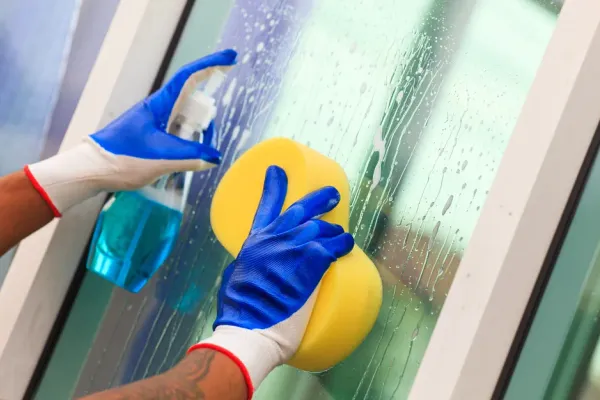
Hard water is water carrying a lot of dissolved minerals, mainly calcium and magnesium. When a droplet of it lands on your window and then dries in the Georgia sun, the water leaves but the minerals do not. They stay on the glass as a tiny crusty ring. One ring is invisible. The problem is repetition: the same sprinkler head hits the same lower pane two or three times a week all summer, and those rings stack into a chalky white film that scatters light and makes the whole window look foggy.
People often assume the glass is just dirty, or that the window is old and clouding from the inside. Usually neither is true. Run a finger across the haze and you can feel a faint grit. That texture is the giveaway that you are looking at mineral buildup on the outside face of the glass, not dirt and not a failed seal.
Left alone long enough, the deposits do more than look bad. The minerals are slightly alkaline and slowly react with the silica in the glass. Given enough seasons they begin to etch, which means they physically pit the surface. Caught early, spotting wipes back to clear in one restoration. Caught late, etched glass may only improve rather than fully clear, which is the honest reason we tell homeowners not to let a spotted window ride for years.
Why Georgia sprinklers leave spots on your windows
The single most common cause we see across Cumming, Forsyth County, and the wider north metro Atlanta area is irrigation overspray. Local lawns lean hard on automatic sprinkler systems through the long dry stretch from June into September, and it only takes one misaimed head to turn a window into a mineral magnet. The head fires, the spray clips the glass, the droplets dry in the heat, and the cycle repeats every few days.
A few things make it worse here than in other parts of the country:
- First-floor glass is in the line of fire. Sprinkler heads sit low, so ground-floor windows, sunroom glass, and basement walkout doors take the most spray.
- Summer heat bakes it on fast. Warm panes flash-dry the water, so the minerals set quickly instead of running off.
- Lake Lanier humidity keeps deposits wet. Around the lake, higher moisture holds droplets on the glass longer, giving the minerals more time to bond.
- Irrigation runs on a timer. Because the system waters whether you are watching or not, the overspray keeps hitting the same panes for weeks before anyone notices the haze.
Sprinkler overspray is the reason hard water work is one of our most-requested specialized window services. It is also the one window problem a normal wash will not fix, which is exactly what the next section is about.

Why washing your windows won't remove the stains
This is the part that frustrates homeowners the most. You wash the window, it looks clean while it is wet, and then it dries right back to cloudy in the same patches. Nothing is wrong with your technique. Soap and water are built to lift dirt that rests on the surface, and mineral deposits are not resting on the surface. They are chemically bonded to it. A squeegee glides straight over them.
Reaching for something stronger usually backfires. Abrasive pads, steel wool, and scouring powders can scratch the glass while barely touching the minerals. Harsh acid cleaners poured on without care can streak the pane, damage the frame paint, harm a low-emissivity coating, or run off into the soil and, near the lake, into the water. That is why hard water work is a controlled restoration and not a scrub.
Removing mineral bonds takes a purpose-made compound, either a mild acidic gel or a fine cerium-oxide polish, worked in a specific way and then fully neutralized and rinsed. Done right it clears the glass without harming it. Done wrong it trades a cloudy window for a scratched one. If you want to compare it against a standard clean, our window cleaning cost guide lays out where the ordinary per-window rate ends and restoration begins.
How we restore stained glass
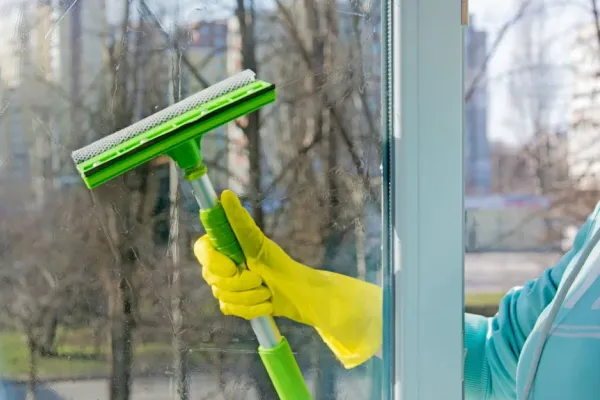
Restoration is a step-by-step process, and every window gets checked first so you only pay to treat the ones that need it.
1. Inspect and test
We look over each pane, feel for that gritty texture, and test a small area to see how the deposits respond. This tells us which windows will clear fully and which are etched enough to only improve.
2. Standard clean first
Before any restoration, the glass gets a normal wash to clear loose dirt, pollen, and grime. There is no sense grinding a polish over a layer of dust.
3. Break the mineral bond
We apply the right compound for the level of staining, a milder gel for fresh spotting and a cerium-based polish for stubborn buildup, and work it evenly across the affected area.
4. Lift, neutralize, and rinse
The dissolved minerals get lifted off, the surface is neutralized so nothing keeps reacting, and the whole pane is rinsed clean of any residue.
5. Final squeegee and check
The window is squeegeed to a streak-free finish and inspected in the light from a couple of angles. Hard water hides at the edges, so we check the corners where the sprinkler spray tends to pool.
6. Optional protective coating
On request we finish restored glass with a water-repelling treatment that helps droplets bead and roll off instead of drying in place, which slows how fast spotting returns.
What hard water stain removal costs
Hard water restoration is priced per affected window, on top of the standard cleaning rate. You are not charged the add-on on the whole house, only on the panes that actually have staining.
| Service (priced per window) | Rate |
|---|---|
| Standard exterior window clean | $10 each |
| Interior window clean | $8 each |
| Hard water stain removal add-on | $25 per affected window |
A few other line items show up on stained-glass jobs. Screen cleaning is $5 per window, track and sill cleaning is $3 per window, and if a screen is torn from years of spray it can be re-screened at $49. Every visit has a $175 minimum, so a small three-window restoration is billed at the minimum rather than a per-window total that would not cover the trip.
Here is how it prices in practice. Say a two-story home has six first-floor windows the sprinklers have been hitting. The standard exterior clean on those six is 6 x $10, and the hard water add-on is 6 x $25, so the restoration portion runs $150 plus the $60 standard clean on those panes, folded into the rest of the whole-house wash. Clean the other windows in the same visit and the whole thing prices out on one flat quote. You can review the full price list or get an exact number through a free estimate.
Homes cleaned on a schedule pay less per visit, since recurring customers save 5% quarterly, 10% bi-monthly, and 15% monthly, and glass that is maintained rarely builds heavy staining in the first place.

How to keep the spots from coming back
Restoration clears the glass. Keeping it clear means dealing with the source, because a window you restore in June will spot right back up by August if the same sprinkler keeps hitting it.
Aim water away from glass. Walk your yard while the system runs and watch for any head that sprays or drifts onto a window. Turning the head, swapping the nozzle, or adjusting the arc is the single most effective fix.
Water early. Running the system before sunrise lets water evaporate off cool glass instead of baking onto hot panes at midday, so fewer minerals set.
Squeegee the low windows. For ground-floor glass the sprinkler reaches, a quick wipe or squeegee after the system runs clears droplets before they dry. Our step-by-step window cleaning guide covers the basic squeegee method.
Coat the restored glass. A water-repelling treatment on freshly cleared windows makes droplets bead and roll off, which buys you time between cleanings.
Clean on a rhythm. The homes that never fight heavy staining are the ones on a recurring plan. Deposits get cleared every visit before they can stack into a haze. If you are local, the Cumming window cleaning page and our Lake Lanier service page cover what we handle around here, and you can always reach the Alexus Window Cleaning team at (470) 333-2525.
Hard water stain questions, answered
The mineral-spotting questions Cumming and north-metro Atlanta homeowners ask us most.
What are hard water stains on windows?
They are mineral deposits, mostly calcium and magnesium, left on the glass after hard water dries on it. A drop of sprinkler water sits on the pane, the water evaporates, and the dissolved minerals stay behind as a chalky white or cloudy ring. Layer enough of those rings on top of each other and the glass looks permanently hazy, even right after you wash it.
Why won't regular window washing remove hard water spots?
Ordinary washing lifts dirt that sits on the surface. Hard water minerals do not sit on the surface, they bond to it, and washing slides right over them. That is why a freshly cleaned window can still look cloudy in the exact spots the sprinkler hits. Taking those deposits off needs a mild acidic or polishing compound and a controlled restoration step, not soap and a squeegee.
What causes hard water spots on Georgia windows?
Almost always sprinkler and irrigation overspray. North metro Atlanta lawns run their systems through the dry summer, and any head that clips a first-floor window sprays mineral-heavy water onto the glass several times a week. Around Lake Lanier the added humidity keeps the deposits wet longer and helps them set. Rain runoff off a roof and construction dust can add to it, but irrigation is the main driver up here.
Can hard water stains be removed, or is the glass ruined?
Most of the time they come off. If the spotting is caught within a season or two, restoration brings the glass back to clear. The hard case is old, baked-on staining that has started to etch, meaning the minerals have actually pitted the surface. Light etching usually still polishes out. Deep etching may leave a faint shadow, and we will tell you honestly before we start whether a window will fully clear or only improve.
How much does hard water stain removal cost in Atlanta?
Restoration is $25 per affected window, added on top of the standard cleaning rate for that window. We only charge it on the panes that actually have staining, not the whole house, so a home with four spotted windows pays the add-on on four windows. Every visit still carries a $175 minimum. You can see the full breakdown on our prices page or send photos for an exact figure.
How do I keep hard water stains from coming back?
Fix the source. Turn or swap any sprinkler head that hits the glass, water early so the sun does not bake droplets onto warm panes, and wipe or squeegee lower windows after the system runs. A protective coating on restored glass helps water bead and roll off instead of drying in place. Homes on a recurring plan rarely build the staining back up, because the deposits get cleared before they can set.
Ready to get the haze off your glass?
Send us a photo of the spotted glass and a rough window count. We will tell you which windows need restoration, which just need a standard clean, and give you a flat total before we start.